
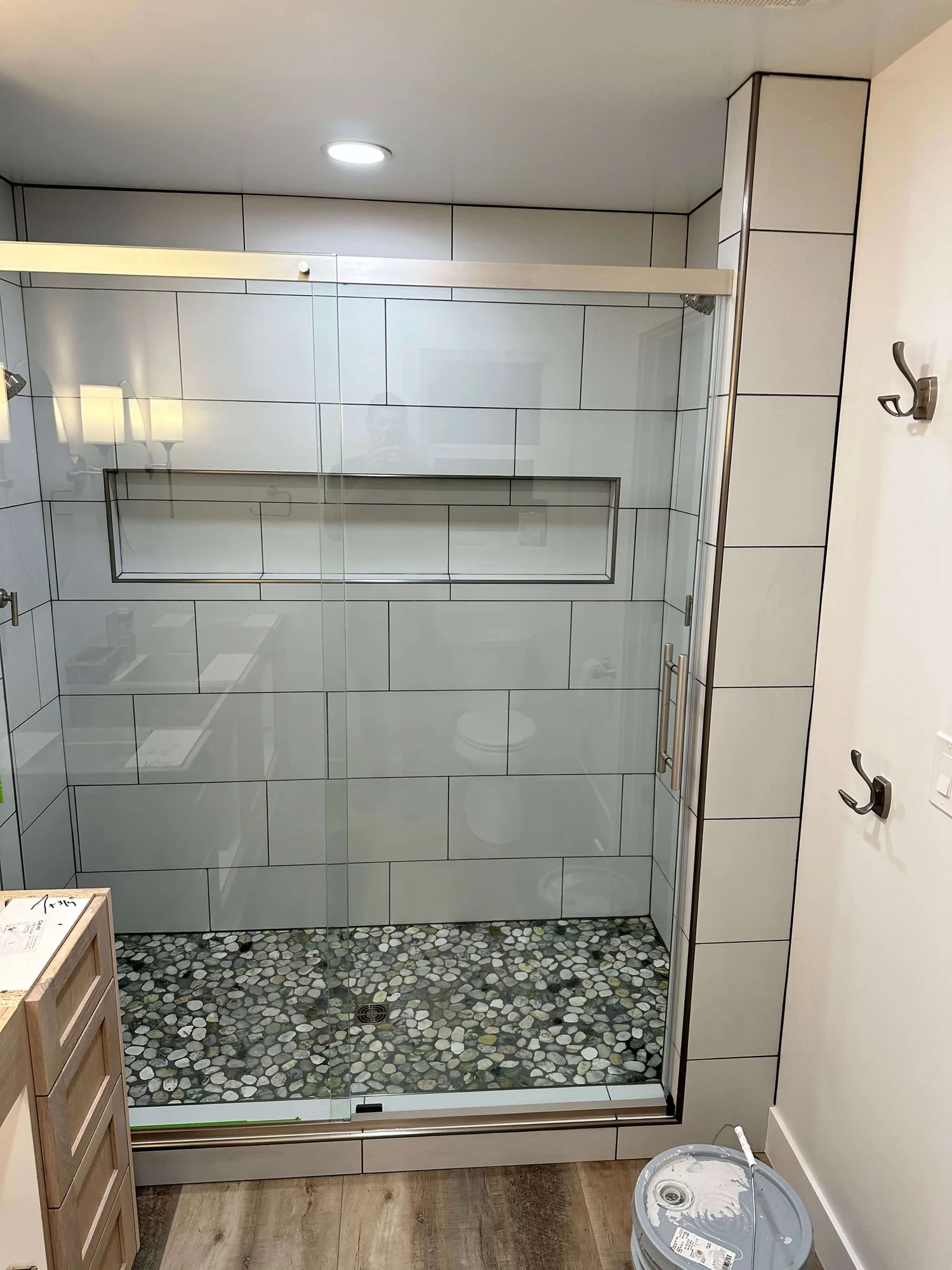
Logan's water is hard, so shower glass spots, grout stains, and fixtures scale up fast. Build the shower for it: porcelain tile in larger formats (fewer grout lines), epoxy or high-performance grout, factory-coated glass with as little hardware as possible, and fixtures with ceramic-disc valves and easy-clean nozzles. Then squeegee after every shower.
If you live in Logan, you already know the white film on the shower door and the crust around the showerhead. That's hard water, and it shapes how a shower should be built here. The tile, grout, glass, and fixtures you choose decide whether your new bathroom still looks new in five years or turns into a weekly scrubbing project.
How hard is Logan's water?
grains per gallon. Logan City's water runs about 200 ppm of hardness, roughly 12 grains per gallon.Source: WaterHardness.org, citing Logan's water quality report
Water over 10 grains per gallon is generally classed as very hard (Herriman City water quality). Our water comes from springs and wells (Logan 2024 water quality report), and that groundwater carries dissolved calcium and magnesium. When it evaporates on your shower, the minerals stay behind.
Where hard water does the damage
Glass
Mineral spots etch into untreated glass over time, and the cloudy film stops coming off.
Build: factory-coated glass, frameless or minimal hardware.
Grout
Standard cement grout is porous. Minerals and soap scum soak in and stain it.
Build: epoxy or high-performance grout, fewer joints.
Fixtures
Scale clogs showerhead nozzles and wears out valve cartridges.
Build: ceramic-disc valves, rubber easy-clean nozzles.
Tile surface
Textured and porous stone holds onto film; matte finishes show it less but trap more.
Build: porcelain, sealed stone if you want stone.
Tile: porcelain, and go bigger
For shower walls in Logan, porcelain is the workhorse. It's dense, absorbs almost no water, and wipes clean. Natural stone like marble is beautiful, but it's softer and reacts with acidic cleaners, which is exactly what people reach for to fight hard water. If you want stone, plan to seal it and clean it gently.
Tile size matters as much as material. Hard water stains live in grout, so fewer grout lines means less to stain. Larger-format wall tile cuts the joints dramatically. It takes a flatter wall and more careful setting, which is where installation quality shows up.
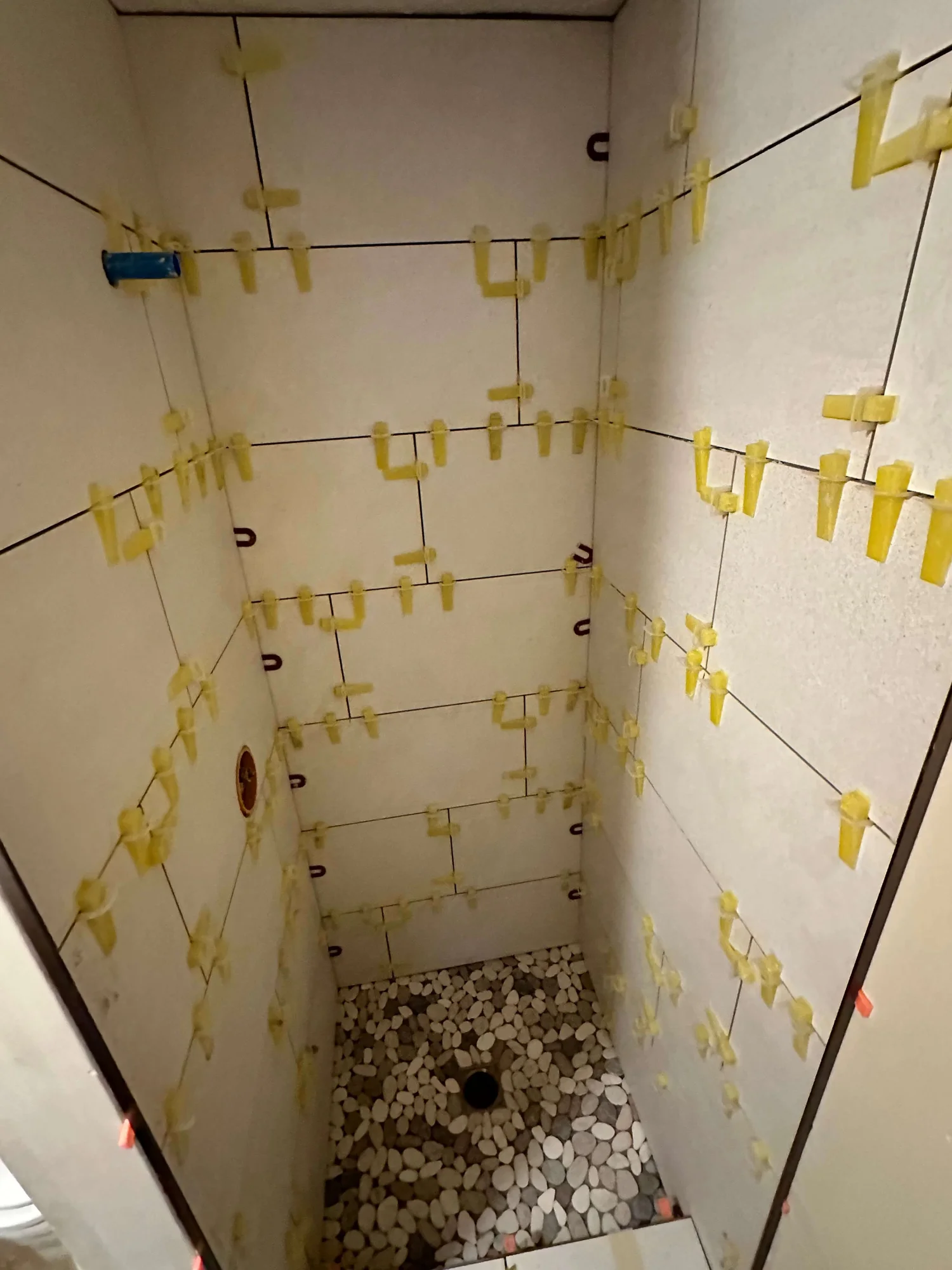
Grout: the part that shows hard water first
Cement grout
- Stain resistance
- Porous; needs sealing and resealing
- Cost
- Lower
- Install
- Forgiving, fast
- Hard water
- Darkens and stains over time
Epoxy grout
- Stain resistance
- Nonporous; no sealing needed
- Cost
- Higher
- Install
- Sets fast, takes skill to clean up
- Hard water
- Wipes clean, holds its color
For a Logan shower, epoxy or a high-performance premixed grout is usually worth the upgrade. The extra cost is small next to the hours you'd otherwise spend scrubbing and resealing.
Glass and fixtures
Glass: ask for glass with a factory-applied protective coating. It sheds water instead of letting it bead and dry, so minerals have less to grab onto. Frameless or minimal-hardware doors also leave fewer metal edges and seams where scale builds up.
Fixtures: look for valves with ceramic-disc cartridges, which handle mineral grit better than older washer-style valves, and showerheads with flexible rubber nozzles you can rub clean with a thumb. Finishes like brushed nickel and matte black hide spotting better than polished chrome.
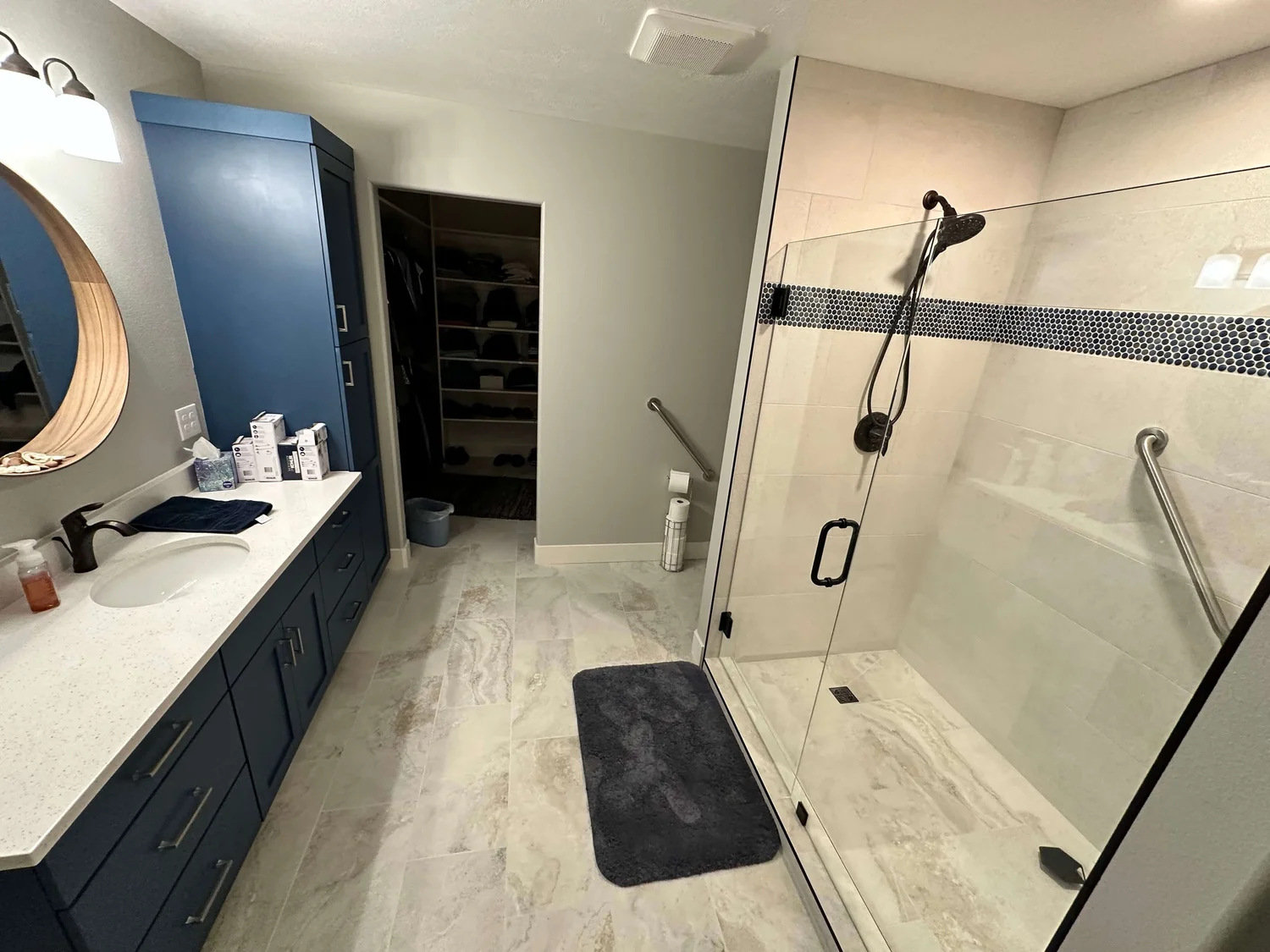
What's behind the tile matters too
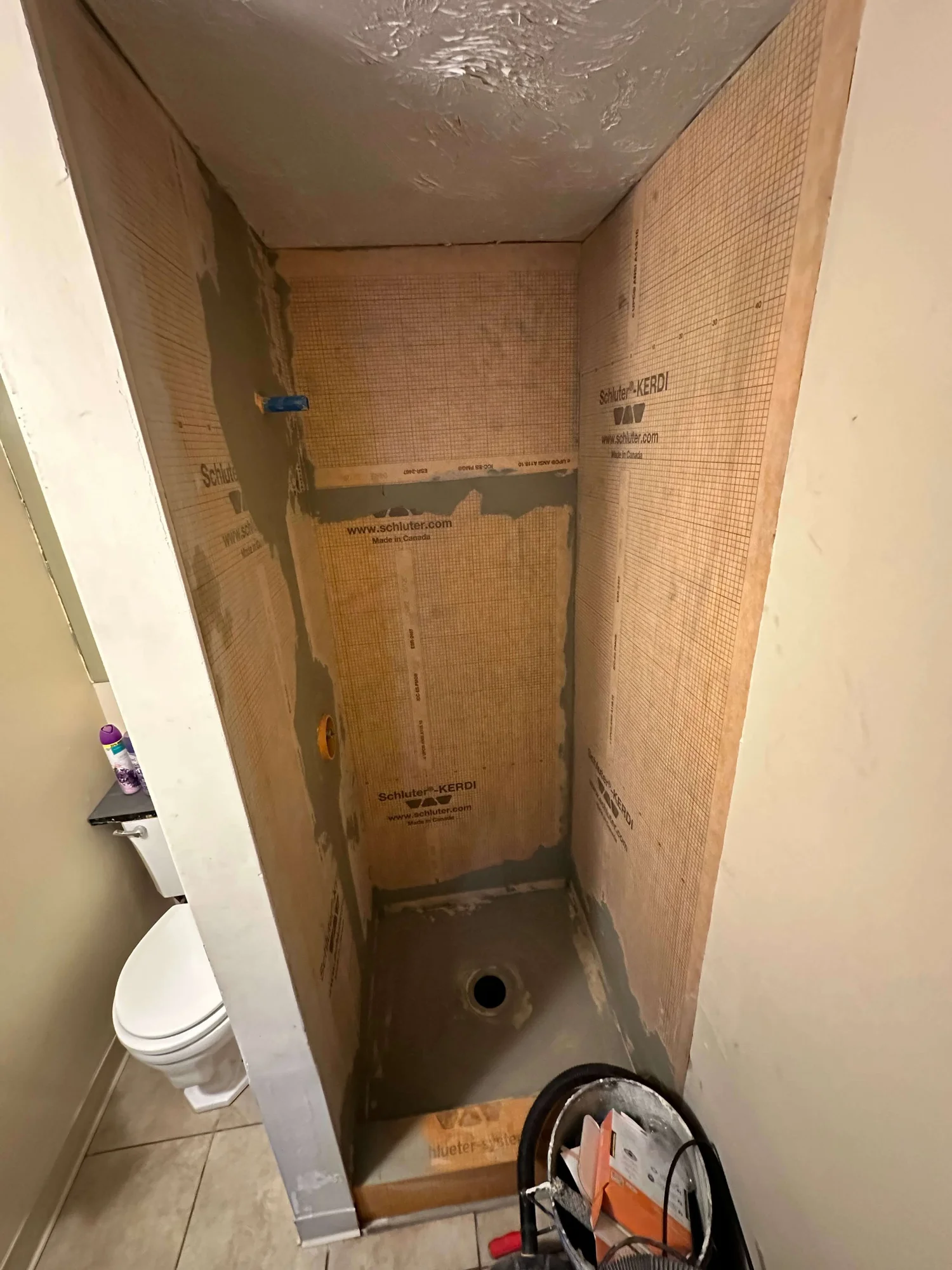
Hard water gets the attention because you can see it. Water that gets behind the tile is the real threat. A shower that looks perfect can still be failing if the walls and pan aren't waterproofed underneath. Every shower we build gets a waterproofing membrane on the walls and pan before tile, sloped to the drain, so the finish you picked sits on a system built to stay dry.
Keeping it looking new
Squeegee after every shower
Ten seconds. Water that doesn't dry on the glass and tile can't leave minerals behind.
Use pH-neutral cleaners on stone
Vinegar and acidic cleaners cut scale but can etch marble and other natural stone.
Wipe the nozzles monthly
Rubber nozzles flex the scale right off before it clogs the spray.
Consider a softener
A whole-house water softener is the one fix that reduces hard water everywhere, not just in the shower.
If your current shower is past saving, or you're planning a new one, we'll help you pick materials that hold up to Logan water. See our tile installation work, or what goes into a full bathroom remodel in Logan. You work directly with owners Ryan and Tyler Wakley, and our own crew handles the waterproofing and tile.
Planning a new shower?
We'll walk your bathroom, talk through tile, grout, and glass that hold up to our water, and give you a clear, itemized estimate.

ONYX Bros is a Logan remodeling and general contracting company owned by Ryan and Tyler Wakley, licensed and insured, rated 5.0 on Google, and featured on HouzzTV. More about us.
FAQ
What tile is best for hard water in a shower?
Porcelain. It's dense, absorbs almost no water, and wipes clean. Larger-format tile also helps because it means fewer grout lines for minerals to stain.
Is epoxy grout worth it in a shower?
In a hard-water area like Logan, usually yes. Epoxy grout is nonporous, doesn't need sealing, and resists the mineral and soap staining that darkens cement grout.
How do I keep hard water spots off my shower glass?
Start with factory-coated glass, then squeegee after every shower so water doesn't dry on the surface. A whole-house water softener reduces spotting everywhere.
How hard is the water in Logan, Utah?
Logan City's water runs about 200 ppm of hardness, roughly 12 grains per gallon, which is in the very hard range.
